
On this page
- What gutter problems can be repaired?
- Why do gutters fail around Cumming?
- How does a contractor diagnose a gutter problem?
- When is replacement the better choice?
- What does a repair cost?
- Can moving the water fix the problem?
- What can you check from the ground?
- How fast should repairs happen?
- Repair or call it a replacement?
What gutter problems can be repaired?
Most of them. Before you replace a whole system, it is worth knowing what a repair can do. Call (470) 839-3794 and an independent contractor can look at the gutters and tell you whether a fix or a new system makes more sense.
| Problem | Usual cause | Usual repair |
|---|---|---|
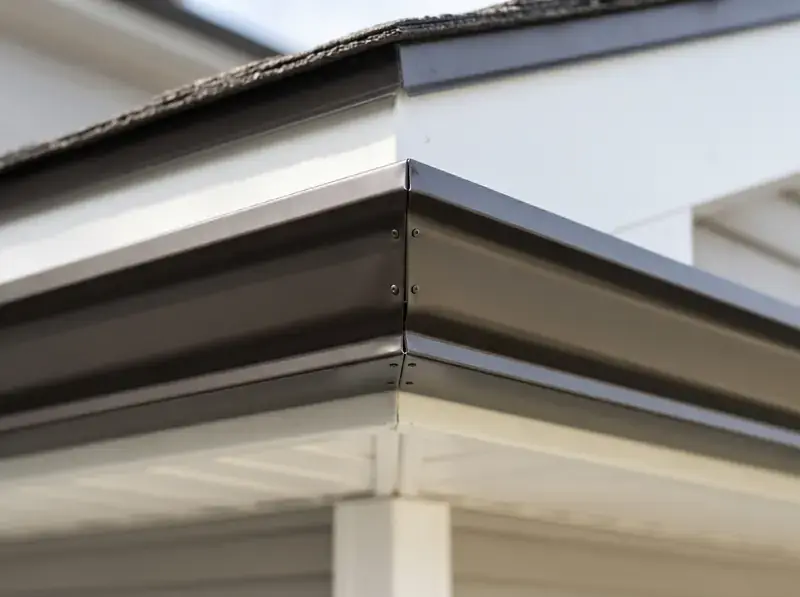
| Leaking corners and seams | Aged sealant, loose rivets | Strip, clean, rivet and reseal |
| Sagging or pulling away | Loose spikes, wide hanger spacing, soft fascia | Re-hang on screw-in hangers, replace wood |
| Overflow | Undersized run, too few outlets, blockage, lost pitch | Clear, re-pitch, add outlets, upsize |
| Storm damage | Limbs, ice, wind | Straighten or replace sections, re-hang |
| Downspout problems | Clogged elbows, crushed or detached sections, short discharge | Clear, replace, extend |
| Rotted fascia and soffit | Years of overflow and leaks | Replace wood, then re-hang the gutter |
Why do gutters fail around Cumming?
Four local pressures cause most repair calls:
- Intense bursts of rain. When a thunderstorm drops rain at several inches an hour, a 5-inch run with one downspout can spill at the corner every time. NOAA's atlas puts a 10-year, five-minute storm near Cumming at about 7.98 inches an hour.
- Pine straw and pollen. Needles mat across outlets, and spring pollen settles into a sludge. A gutter that holds water gets heavy, and the trough and fascia stay wet.
- Storms and limbs. The February 2015 ice storm caused widespread tree and power line damage across north Georgia, and Tropical Storm Helene brought down trees in Forsyth County in 2024. Summer thunderstorms knock limbs onto roofs most years.
- Builder-grade hardware. Spike-and-ferrule hangers, thin .027-inch aluminum and corners sealed with sealant alone age quickly in hot summers and freezing nights.
How does a contractor diagnose a gutter problem?
By watching the water. The most useful visit is during or soon after rain, or with a hose. A contractor will usually:
- Look along each run from the ground for sags, dips and gaps behind the gutter.
- Check from a ladder that each run falls toward its outlet and that no water sits in the trough.
- Look inside corners and end caps for failed sealant and rust or corrosion.
- Probe the fascia behind the gutter for soft wood, especially below past overflow.
- Run water through each outlet and downspout, and check where it comes out.
- Look at the roof edge for a missing or short drip edge.
When is replacement the better choice?
When the problems are everywhere. Repair makes sense when the metal is sound and the faults are local. Replacement is often better when the system leaks in many places, the runs are too small for the roof, the fascia is soft along a whole side, or the gutters are sectional and every joint has started to drip. See gutter replacement and repair or replace?.
What does a repair cost?
It depends on access and how much wood is involved. Resealing a corner or re-hanging a short sag is usually a short visit. Re-pitching a full side, adding downspouts or replacing several boards of fascia takes longer. Ask for a written price before work starts, with any wood repair priced separately so you can see what it adds.
Can moving the water fix the problem?
Sometimes the best repair is at the bottom of the downspout. If water spills out of a short extension and runs back along the foundation, the gutter may be working but the house still gets wet. UGA Extension advises making sure gutters drain away from the house as part of keeping termites out. A longer extension, a splash block on a slope, or a buried line to a pop-up emitter can solve a damp crawl space or a stained basement wall. See downspout drainage on red clay.
What can you check from the ground?
Stand back during a steady rain and look along each run. Water sheeting over the front, a drip line at one corner, a run that bows between hangers, and a downspout with little water coming out each point to a specific repair. Photos or a short video help the contractor arrive with the right parts.
How fast should repairs happen?
Fix anything that dumps water at the foundation, hangs over a walkway or has torn away from the house as soon as you can. Small corner drips and minor sags can wait for a dry spell, but not for years; the wood behind them softens with every storm.
Repair or call it a replacement?
A good contractor will tell you when a repair is throwing good money after bad. If the quote for patching several corners, re-hanging two runs and replacing fascia is close to the price of new, correctly sized gutters, the new system usually wins over the next ten years. Ask for both prices.